 Asale
AsaleSelling a ChatGPT / Codex subscription
Connect a ChatGPT Plus or Pro seat for Codex — including the model-slug quirk that makes this provider different from the rest.
A ChatGPT subscription is sold through the Codex channel. The Plus ($20) or Pro ($200) you pay for every month sits idle most of the time — this guide shows you how to put the idle part on the market and earn from it.
Time needed: about 10 minutes | Platform fee: 8%
Before you start
You need:
- A paid ChatGPT subscription (Plus or Pro). A free account has no capacity to sell.
- A computer that can stay on and can reach OpenAI (if it cannot, you get a constant 403 — see below).
- An address that can receive USDT (Solana or TRON). Not having one yet is fine.
When you sell, the machine that actually asks the vendor is your own computer, using your own account — so connecting the account, the automatic renewals afterwards, and every job you do for a buyer all require that path to work. In some regions a direct connection is refused (the client shows 403); this is not a sign-in problem, and signing in again will not help.
The client ships with Settings → Network → Upstream proxy (auto / force direct / manual, supporting http://, https:// and socks5://), and you can click Test connection to verify it. See Install the client.
Step 1: Install the Asale client and sign in
If you have not installed it, work through Install the client first: download → install → register and sign in on the Account page.
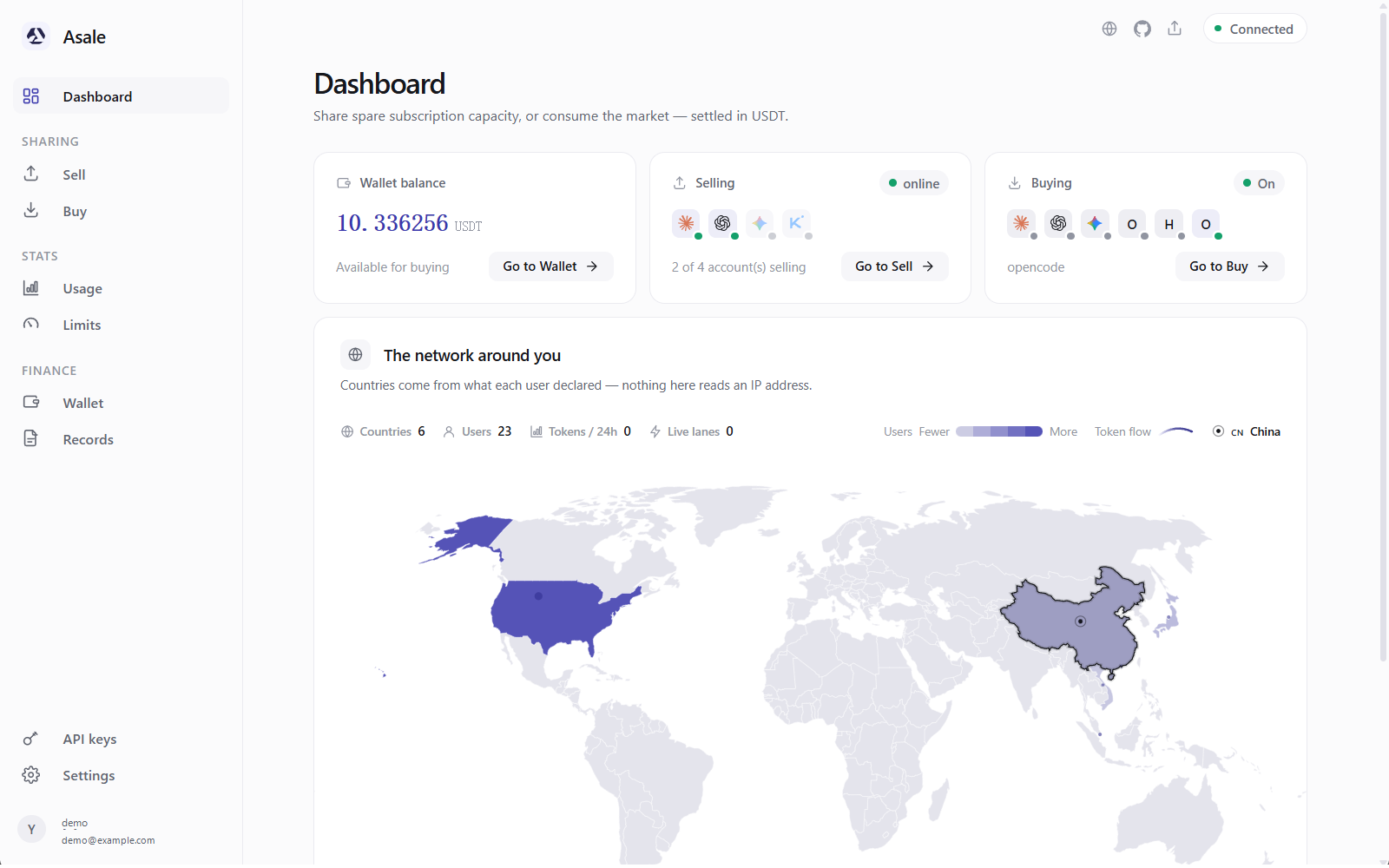
Step 2: Open the "Sell" page
Click Sell on the left.
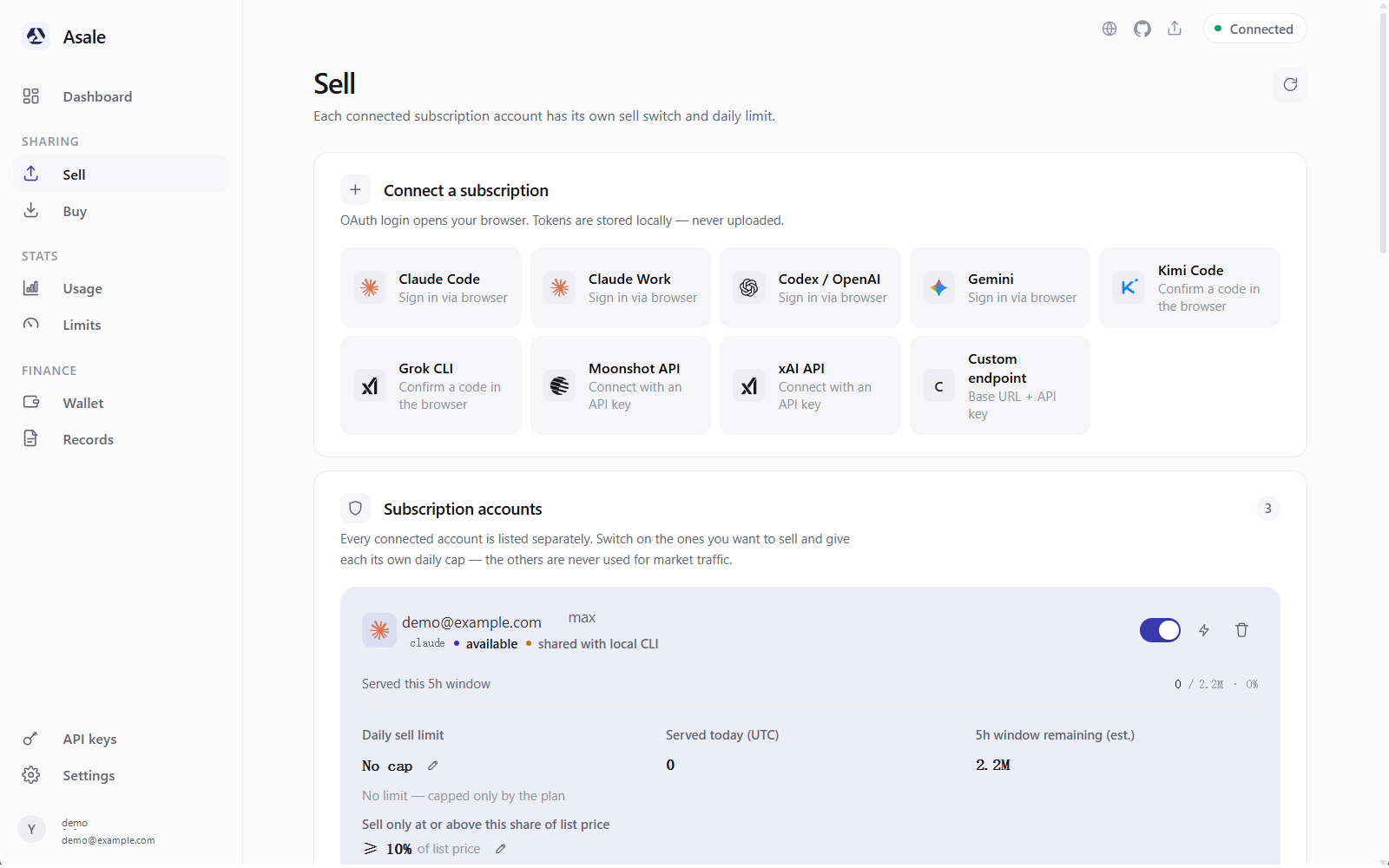
Step 3: Connect your ChatGPT account
Case A: Codex is installed and signed in on this computer
On startup the client scans ~/.codex (on macOS it also reads the "Codex Auth" keychain entry). If you are signed in, it imports the account automatically and marks it shared with local CLI in the list.

If it is already here, do not connect again — skip to step 4.
Case B: Connect manually
Click Sign in via browser.
- The browser opens OpenAI's sign-in page
That is OpenAI's own page; your password goes only to OpenAI.
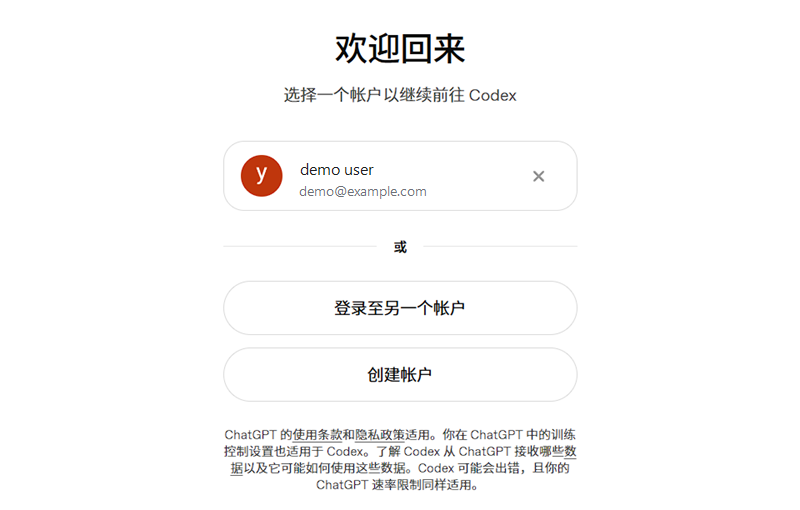
- Sign in and authorise
Sign in the way you normally sign into ChatGPT, then approve.
- Back to the client
A green message appears: Connected to codex (your email address), and the account shows up in the list.
 Authorised, but the browser page will not open
The callback address points at the machine running the browser, not the one running Asale. Copy the whole string from the browser's address bar, paste it into the input box in the client, and the connection completes.
Step 4: Read the numbers on the card
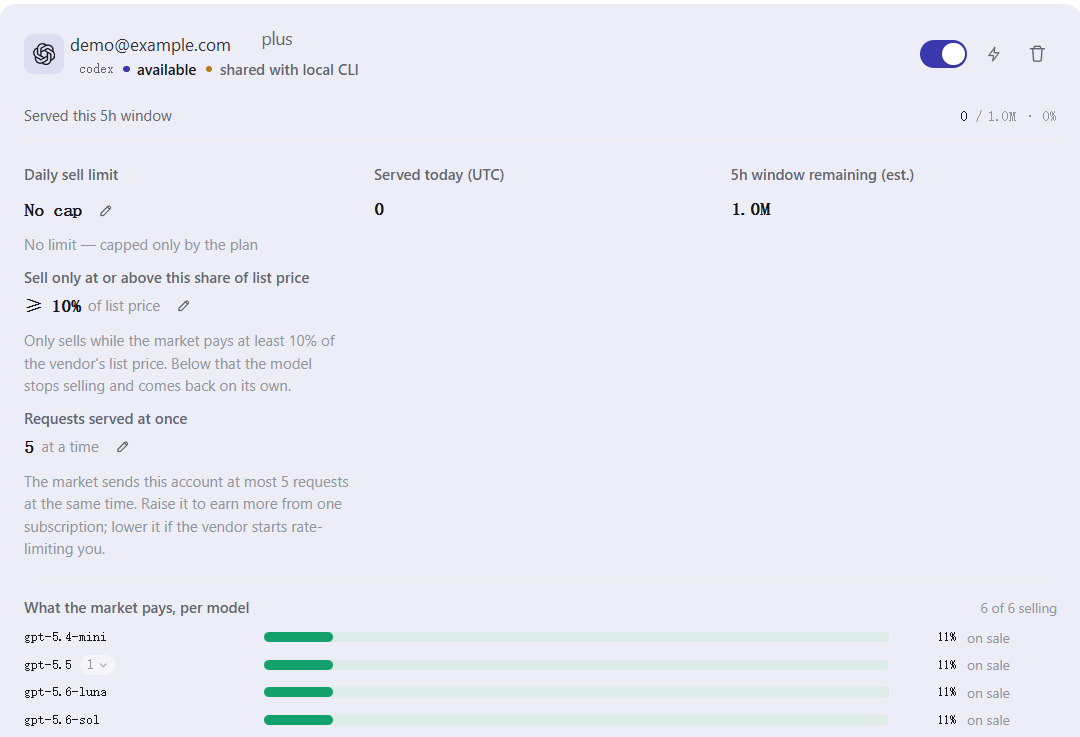
Which window size your plan gets:
| Plan | 5-hour window | Per full day |
|---|---|---|
| Pro | 2,000,000 | 9.6M |
| Plus | 1,000,000 | 4.8M |
The other fields (served this window, served today, available / cooldown / expired) work the same as for every other vendor.
Step 5: Set the daily limit first
Sell on the left → click the pencil (Edit limit) next to Daily sell limit on the account card. The Limits page on the left is a read-only usage view; you cannot set a selling cap there.
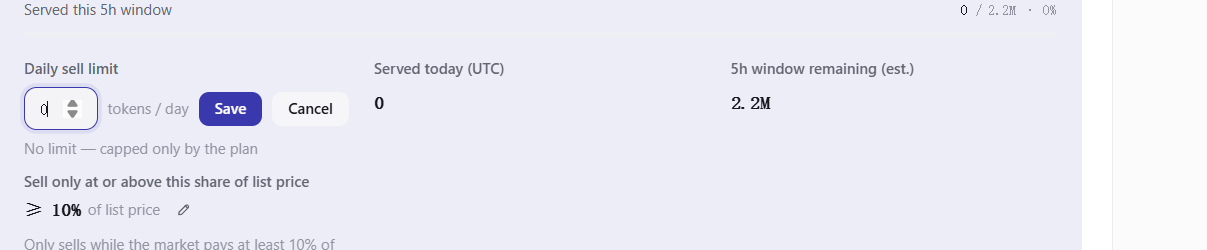
Enter a whole token count (2000000, say) and click Save. It does not accept things like 50%.
Selling draws on your own 5-hour window. Sell it all and the next request OpenAI refuses will be your own. Selling stops automatically at the cap and resumes at UTC midnight.
Step 6: Turn on the sell switch
Turn on Sell this account on the account card.

The status in the bottom-left corner becomes online, and the Dashboard shows 1 / 1 on.
Step 7: The trap unique to Codex — model names
This is where Codex differs most from every other vendor, and it is worth a look on its own.
The market lists the name gpt-5-codex, but calling it with a ChatGPT subscription is refused outright. So the client will not use it to take jobs.
What it can actually serve is: gpt-5.6-sol, gpt-5.6-terra, gpt-5.6-luna, gpt-5.5, gpt-5.4, gpt-5.4-mini.
The list above is the fallback set the client uses before it has worked out what your account is entitled to. Once it has established which models your account can actually use, the list shrinks to just those — a Plus account will stop taking jobs that only Pro can handle.
So: turning the switch on the instant you connect can land you a job on a model you do not have access to, the request fails upstream, and it costs you reputation. The safe approach is to wait a few minutes after connecting and let the per-model status settle before flipping the switch.
The Per-model block on the account card shows the end result:

Step 8: Confirm you really are selling
Records → Sell tab lists every job: time, model, token count, and how much it earned.
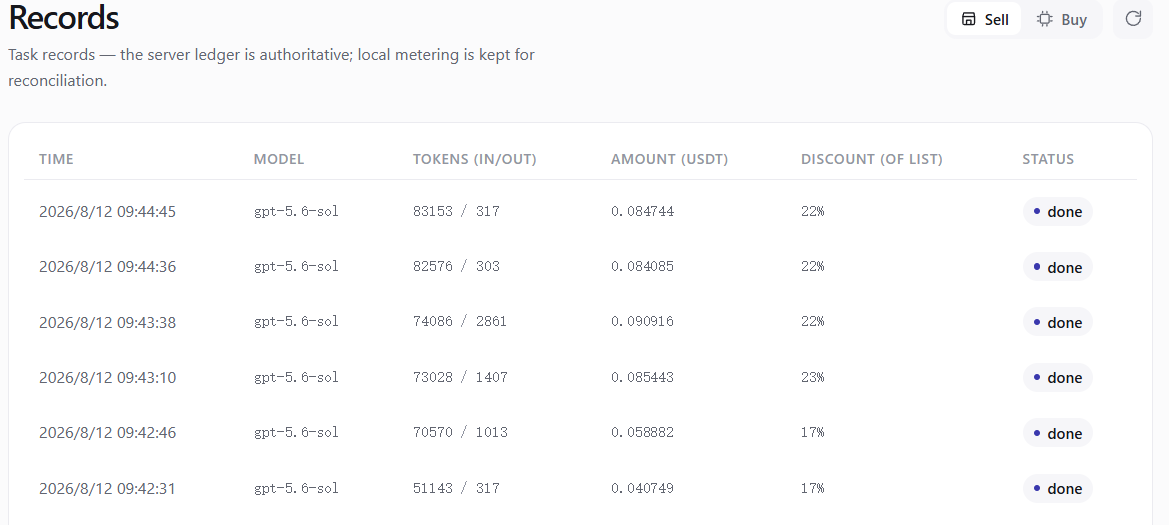
If Payable (earnings) in the Wallet is going up, everything is working.
The market assigns work on four factors — price 45%, reputation 25%, response speed 15%, success rate 15% — and you need a reputation of at least 600 to be queued at all. A new account sitting at the back is perfectly normal; leave it listed for a day and look again.
Step 9: Withdraw
Wallet → Withdraw → pick Solana or TRON → enter an address on that chain and an amount. The page shows the fee and what actually arrives.
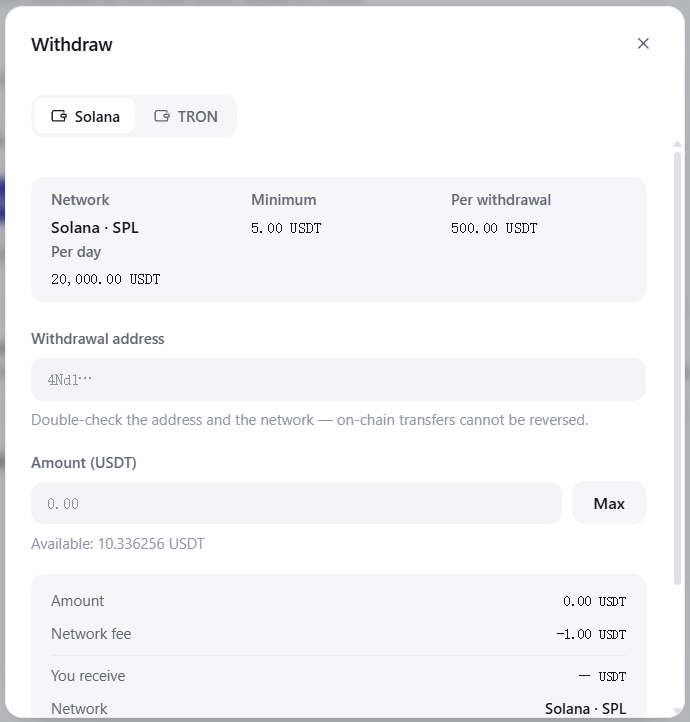
On-chain transfers cannot be reversed. Check the address and the network twice before you submit.
Common questions
I also want to buy through Codex on this computer — does that conflict? Yes. While Codex's Buy switch is on, the Codex account imported from this machine is automatically taken out of the sale listing. The same account cannot buy and sell at once.
Why does my account keep failing and losing reputation? The most common cause is the model-entitlement problem above — you flipped the switch before the entitlement probe finished and took a job on a model you do not have. Turn the switch off, wait a few minutes, turn it back on.
Can I sell only certain models? You cannot tick them individually. What you control is the daily cap and the price floor — set the floor higher and the cheap jobs stop coming.
Can I still use ChatGPT on the web normally? Yes. Selling consumes subscription capacity, so the more it is used the less is left for you — which is exactly why you set a daily cap.